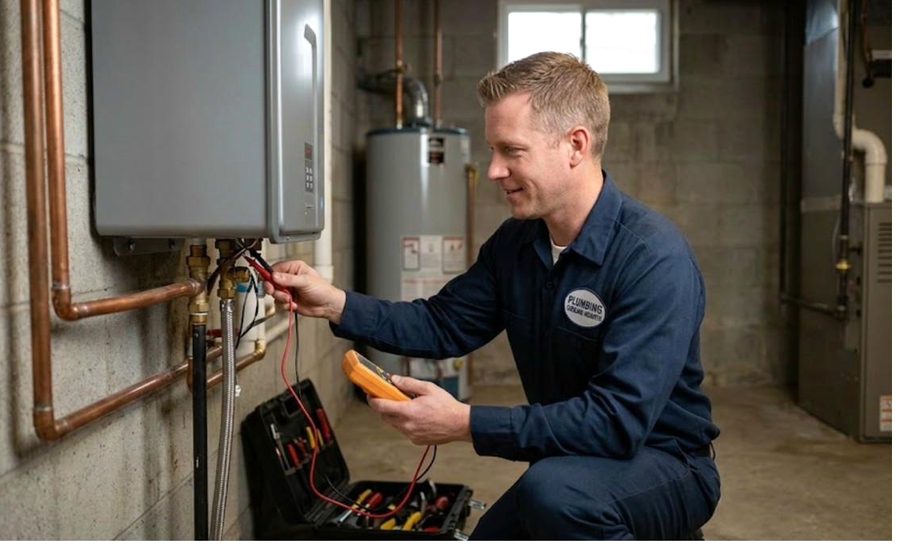
Signs You Need Tankless Water Heater Installation
If you're experiencing any of the following, it's time to schedule service with a licensed plumber in Sterling Heights:
Running out of hot water frequently
Tank water heater approaching end of life
Wanting to reduce energy costs on water heating
Limited space where the current water heater is located
Upgrading to a more efficient home system
What's Included
Here's what to expect when you call us for tankless water heater installation in Sterling Heights:
Load calculation to select the right BTU output
Assessment of existing gas line capacity and venting
Gas line upgrade if current supply is insufficient
Dedicated venting installation (typically direct-vent)
Full startup, temperature setting, and operational test
Our Tankless Water Heater Installation Process
From first contact to completed work, here's how we approach every tankless water heater installation service call:
Calculate Hot Water Demand
We assess your household's peak hot water usage to size the unit correctly — undersized units won't keep up.
Evaluate Gas and Venting
Tankless units need a larger gas supply and direct venting. We check if upgrades are needed before installation.
Install Gas and Vent
Gas line and vent runs are completed before the unit goes in — ensuring everything is ready for a clean installation.
Mount and Connect Unit
The tankless unit is wall-mounted and connected to gas, cold water supply, and hot water output lines.
Commission the System
We start the unit, set temperature, verify flow rates, and check for any errors or issues before leaving.
Related Plumbing Services
Tankless Water Heater Installation FAQs
It depends on your usage patterns. Tankless units provide on-demand hot water and use less energy in standby mode. They cost more upfront but have a longer lifespan — typically 20+ years.
A properly sized tankless unit can handle simultaneous hot water demand. If your household has very high peak demand, we may recommend a larger output unit or multiple units.
Often, yes. Tankless units require more gas flow than tank heaters during operation. We assess your existing line and upgrade it if necessary — this is factored into the installation plan.
Annual descaling is recommended in areas with hard water to maintain efficiency and extend lifespan. Some models have built-in alerts when maintenance is due.
Tankless units are typically 24–34% more efficient than conventional tanks for homes that use moderate amounts of hot water. Actual savings depend on usage patterns and current utility rates.